
Industries
Clear digital journeys for people-first organizations.
Patients and families don't navigate your org chart — they search symptoms, compare providers, and need plain-language paths to book, enroll, or get answers. We design accessible experiences that respect privacy, reduce anxiety, and convert intent into scheduled care or admissions.
16+ Health & edu clients
99% WCAG target compliance
+36% Online booking lift
4.9 Client rating
The challenge
Sound familiar?
- Patients can't find the right service line, provider, or location because site IA mirrors internal departments
- Appointment booking breaks on mobile or routes users to phone trees that lose them after hours
- HIPAA, FERPA, and regional privacy rules make teams afraid to implement tracking and nurture that other sectors take for granted
- Content is written for clinicians and administrators, not for the questions families actually type into Google
- Enrollment cycles are seasonal but marketing runs always-on campaigns with no alignment to application deadlines
Overview
Digital experiences that reduce friction in high-stakes decisions
Healthcare and education share unforgiving user expectations: information must be accurate, accessible, and easy to act on — often during stressful life moments. Marketing here is part of care delivery and student success, not a layer painted on top.
We start with how people search — condition + location, program name + outcomes, insurance accepted, campus visit availability — and build site structure and landing pages around those paths. Departmental politics shouldn't dictate navigation; patient and student behavior should.
Accessibility isn't a checkbox. WCAG-aligned design, readable typography, captioning, and form error handling directly affect whether someone in crisis can book care or a first-generation student can complete an application. We bake those requirements into design systems, not audit fixes at launch.
Compliance-aware measurement uses consented analytics, de-identified reporting, and clear boundaries on retargeting. You still get funnel visibility — appointment starts, application submissions, call volume by service line — without practices that create regulatory exposure.
Capabilities
How we help education & healthcare brands grow
Service-line journey design
Navigation and landing pages organized by patient condition or academic program — not internal org charts.
Faster path to care
Accessibility-first UX
WCAG-aligned components, readable content, and form design tested for screen readers and mobile users.
Inclusive experiences
Condition & program SEO
Medically accurate, plain-language content clusters reviewed by your clinical or academic stakeholders.
Qualified organic traffic
Booking & application funnels
Scheduling widgets, multi-step applications, and save-and-resume flows that reduce drop-off on mobile.
Higher completion rates
Inquiry routing & nurture
CRM workflows for patient navigators and admissions counselors with deadline-aware email sequences.
Timely human follow-up
Multi-location local presence
GBP management, location pages, and hours/insurance clarity for every site in your network.
Accurate local discovery
Buyer journey
How your customers decide
01
Symptom or goal search
Patients search conditions, specialists, or urgent care options; students search programs, outcomes, and affordability signals.
02
Provider or institution comparison
Reviews, outcomes data, accreditation, insurance networks, and campus culture shape the shortlist.
03
Logistics & trust
Hours, locations, telehealth availability, financial aid deadlines, and clear next steps determine whether they proceed.
04
Book, apply, or enroll
Conversion via appointment booking, portal registration, application submission, or campus tour — form complexity and response time are decisive.
Recommended services
The right mix for education & healthcare
Website Design
Accessible service-line architecture, provider finders, and mobile-first booking flows.
SEO Services
Condition, program, and local SEO content that answers real patient and student queries.
Lead Generation
Enrollment and consultation funnels with seasonal campaign calendars tied to intake cycles.
CRM Solutions
Inquiry routing to counselors or patient navigators with SLA tracking and nurture sequences.
Deliverables
What a typical engagement includes
- Patient or student journey mapping workshop
- Information architecture and content governance plan
- Accessible website design and development
- Provider or program directory with search and filters
- Online booking or application funnel implementation
- HIPAA/FERPA-aware analytics and tagging plan
- Local SEO and condition/program content roadmap
- Monthly reporting on bookings, inquiries, and enrollment metrics
Channels & tactics
Where we focus for education & healthcare
Local discovery
Google Search & Maps
Location & hours
Google Business Profile
Awareness & education
Meta & YouTube
Enrollment cycles
Email nurture
Offline-to-digital
Physician & counselor referral
Trust building
Community partnerships
Results
Related work & outcomes
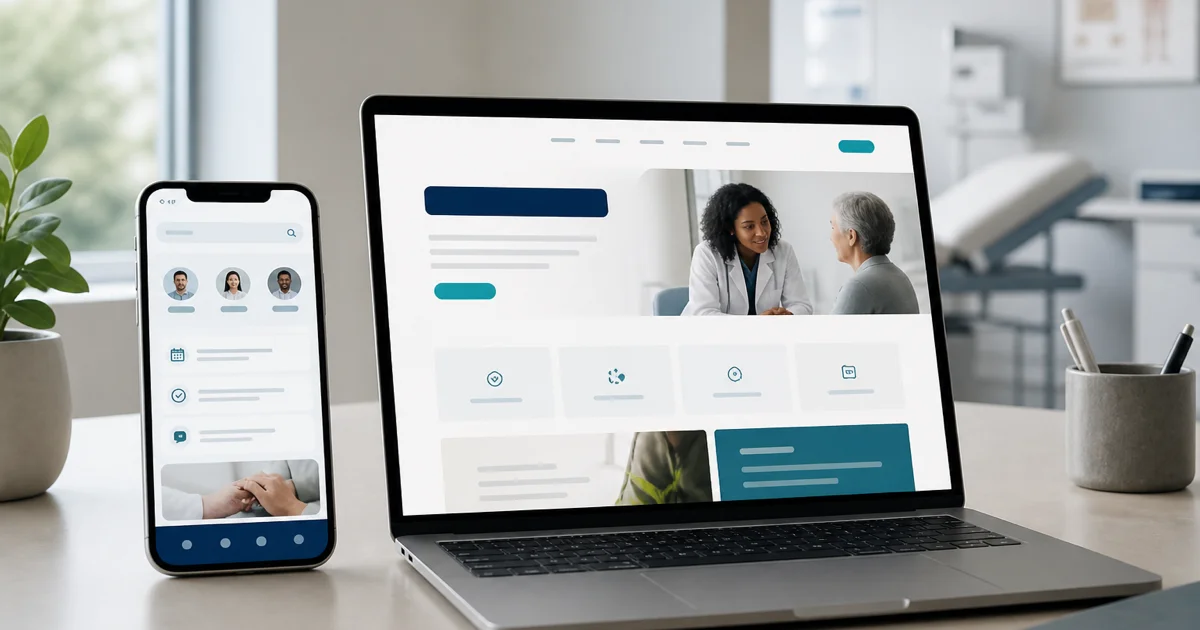
Multi-location clinic web redesign
Service-line IA, provider directory, and online scheduling integrated with EHR booking rules.
+36% online appointments
Private university enrollment funnel
Program pages, financial aid content, and application nurture aligned to admission deadlines.
+22% completed applications

Health system local SEO program
Location pages and condition content clusters across 12 facilities.
+48% organic appointment requests
Our process
How we partner with education & healthcare brands
01
Discover
Sector audit, competitor review, and buyer research — grounded in how your market actually decides.
02
Plan
Channel mix, messaging, and KPIs aligned to your industry's sales cycle and compliance needs.
03
Build
Web, campaigns, and content produced with sector-specific proof and conversion paths.
04
Grow
Optimize, report, and scale what works — with benchmarks relevant to your vertical.
Related sector
Healthcare vs. financial services marketing
Both sectors operate under strict compliance, handle sensitive data, and require trust before conversion. Financial firms face similar challenges around disclosure-heavy funnels and cautious buyers — though patient journeys add clinical accuracy and accessibility requirements unique to care delivery.
Related industries
Explore more sectors
Banking & Financial
Financial buyers evaluate security, regulatory standing, and clarity long before they submit an application. We build co…
Real Estate
Real estate decisions hinge on location proof, developer credibility, and how fast your team responds. We build digital …
Consumer Goods
Shelf space and ad spend no longer guarantee velocity. Consumer brands need distinctive storytelling, shoppable digital …
FAQs
Common questions about education & healthcare marketing
Do you work with hospitals, clinics, schools, and edtech?
Yes. Provider networks need service-line and booking focus; schools need enrollment funnels; edtech needs product-led growth within education compliance norms.
How do you handle HIPAA and patient privacy in marketing?
We avoid PHI in analytics, use consented tracking, and align form and CRM practices with your privacy officer's requirements — no shortcuts that create audit risk.
Can you integrate with our EHR or SIS scheduling systems?
Integration scope depends on your vendor APIs. We frequently embed approved scheduling widgets and route fallback inquiries when live slots aren't available.
Who reviews clinical or academic content for accuracy?
Your clinical educators, medical directors, or admissions team approve content. We write for lay audiences and incorporate SME review into the workflow.
Is WCAG compliance included in website projects?
Yes. Accessibility is a requirement, not an add-on — design, development, and QA all target WCAG 2.1 AA unless you specify otherwise.
How do enrollment campaigns align with admission deadlines?
We build seasonal calendars — awareness, application push, decision day, yield — with budget and creative weighted to your intake curve.
Can you improve our existing site without replacing everything?
Often. High-impact fixes include IA cleanup, booking flow optimization, and priority service-line pages before a full redesign.
Do you support telehealth marketing?
Yes — dedicated landing pages, state eligibility messaging, and campaigns that distinguish virtual vs. in-person services.